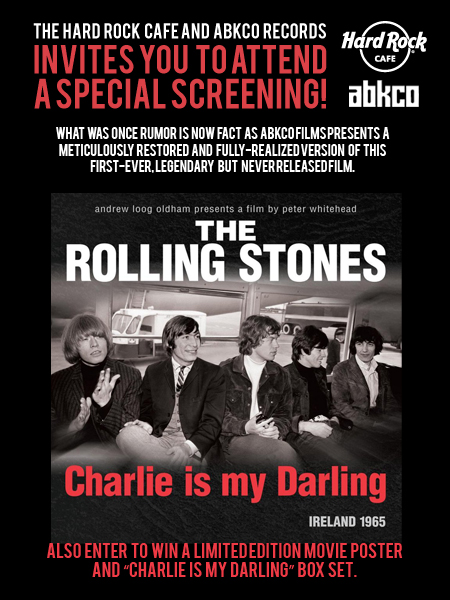
ABKCO Films and Hard Rock Cafes around the U.S. are celebrating the release of The Rolling Stones Charlie is my Darling – Ireland 1965 this November!
Head to Hard Rock to watch the film and enter to win some great Charlie is my Darling prizes!
See below for a list of participating locations dates and times. Hope to see you there!
SCHEDULE
ATLANTA, GA
Monday, November 12th at 7 p.m.
Hard Rock Cafe Atlanta
215 Peachtree St. NE
P: 404-688-7625
BOSTON, MA
Tuesday, November 13th at 7 p.m.
Hard Rock Cafe Boston
22-24 Clinton St.
617-424-7625
CHICAGO, IL
Wednesday, November 14th at 8 p.m.
Hard Rock Cafe Chicago
63 West Ontario
P: 312-943-2252
HOLLYWOOD, CA
Wednesday, November 14th at 8 p.m.
Hard Rock Cafe Hollywood
6801 Hollywood Blvd. #105
P: 323-464-7625
LAS VEGAS, NV
Thursday, November 15th at 7 p.m.
Hard Rock Cafe Las Vegas
3771 S. Las Vegas Blvd
702-733-7625
SAN ANTONIO, TX
Sunday, November 18th at 7 p.m.
Hard Rock Cafe San Antonio
111 W. Crockett St.
P: 210-224-7625
SAN FRANCISCO, CA
Tuesday, November 13th at 5:30 p.m.
Hard Rock Cafe San Francisco
39 Pier #256
P: 415-956-2013
WASHINGTON, DC
Monday, November 12th at 7 p.m.
Hard Rock Cafe Washington, DC
610 10th Street NW, Suite 200
P: 202-737-7625
ABKCO Films’ acclaimed Rolling Stones documentary The Rolling Stones Charlie Is My Darling–Ireland 1965 came out yesterday in Super Deluxe box set, Blu-ray and DVD configurations.
Additionally, the film, which shows never-before-seen footage of the Stones’ first filmed concert event, is set to premiere Nov. 10 in theaters and on DIRECTV’s Audience Network’s Something To Talk About series of socially and culturally relevant documentaries.
Charlie Is My Darling–Ireland 1965 was originally directed by English filmmaker Peter Whitehead, who later directed several music videos for the Stones, and produced by the band’s first manager and producer Andrew Loog Oldham. It was shot during a weekend tour of Ireland just weeks after “(I Can’t Get No) Satisfaction” hit No. 1 on the charts.
But Whitehead’s 35-minute cinema verite version of the film, while legendary, was never released officially. The new ABKCO release, at 65 minutes, is substantially longer and fully realized, with meticulously restored footage. Produced by the Grammy-winning team of producer Robin Klein and director Mick Gochanour (Best Long Form Video for Sam Cooke: Legend), it has new concert footage of performances including “The Last Time,” “Time Is On My Side” and the first-ever concert performance of “(I Can’t Get No) Satisfaction”—all professionally filmed and full of frenzied fan reactions.
Charlie Is My Darling also presents intimate, behind-the-scenes material depicting the young group’s life on the road, including impromptu interviews, songwriting and singing sessions.
All three ABKCO Charlie Is My Darling packagings contain the original Whitehead version of the film, a 50-minute version by Oldham that was first seen in the 1980s, and the new Klein-Gochanour production. The Super Deluxe box set includes both DVD and Blu-ray discs, plus unseen additional performance and other footage shot in Dublin and Belfast in September, 1965.
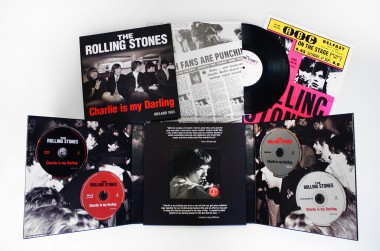
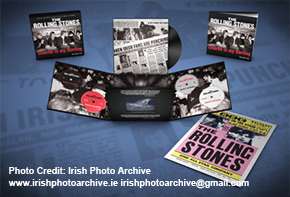
Also contained in the Super Deluxe set are two CDs: One is the film’s soundtrack and the other a compilation of 13 live recordings the band made during its 1965 U.K. tour. A 10-inch vinyl record of the live material is also included, along with a replica poster promoting the Belfast show; the box also has a 42-page hardcover book including key artwork and photos, vintage press reprints and contemporary essays from Rolling Stone’s David Fricke and Academy Award-winning Irish singer-songwriter/actor Glen Hansard.
Oldham had wanted Whitehead to travel with the group and film them.
“The Beatles had done Hard Days Night,” says Klein. “Everybody was looking toward film, so Andrew hired Peter to see what the Stones would be like around a camera and get them used to the idea—‘get their celluloid legs,’ in Andrewspeak. So Peter was there for everything: when they were writing songs, on the train and public transportation. ‘Satisfaction’ was No. 1, but they were in Ireland, where people kind of knew who they were, but not really.”
The Stones did four 35-minute shows in two nights in Ireland, before returning to London and then heading to Los Angeles to record “Get Off Of My Cloud.” According to Klein, there was no documentation relating to the scenes in Whitehead’s original Charlie version. ABKCO, she says, also discovered last year that much of the film’s negatives hadn’t been exposed.
“The film was not supposed to come out, but Peter got angry at Andrew and showed it at a festival,” continues Klein. “Andrew didn’t want to put it out, as he and the Stones were more concerned with touring and songwriting. So it was shelved, like the Rock And Roll Circus [the legendary The Rolling Stones Rock And Roll Circus program, starring the Stones and guests including John Lennon and Eric Clapton, which ABKCO eventually released on DVD].”
“But parts of it emerged on [‘60s TV shows] Shindig! and Top Of The Pops when the Stones were unable to perform live because they were touring,” Klein adds. “Andrew cut it up as music video and farmed it out, and that’s how it got seen—if it got seen.”
She stresses, however, that the new ABKCO version of Charlie Is My Darling is not a “restoration project” as such.
“It gets confusing because we kept the title, and the footage was shot for that project,” explains Klein. “But as we all know, that project was not meant to come out.”
ABKCO, whose late founder Allen Klein had managed the Stones, had access to Whitehead’s material, but his version wasn’t long enough to put out, and an early attempt to expand it for DVD with extra material was unsatisfactory.
Then last year Oldham suggested to go back to it “as a restoration piece,” notes Klein, “but it was a mess—and we didn’t have audio.”
Still, Gochanour was determined, Klein says, “so last summer we sat there and meticulously—and painfully!—organized everything into bins, by song, name, color, even Mick’s coat, which was black one night, white another.”
Pertaining to songs, Klein says they had to read lips at times to identify the song footage; luckily, “we had the set lists!” Gochanour and editor Nathan Punwar “had enough [camera] coverage to cover a song,” meaning there was usually enough existing footage available to construct a complete song performance on video, even though it was shot mostly with one camera, with an eight-minute film reel capacity.
“There were 30,000 to 40,000 frames per reel, and it took us two days to scan one reel,” she says, speaking of the painstaking process of converting Whitehead’s film elements, which were in London, to high-definition Blu-ray video media. There were 35 cans of footage, totaling six hours of film altogether.
“Everything was shot in ’65, so it was breaking and tearing and was chemically stained and faded and scratched–literally dumped on the cutting room floor,” says Klein. “After scanning everything for three months, we started editing with all this extra footage–not just performances but extra scenes and interviews and voice-overs. So we actually deconstructed Peter’s version.”
Klein describes the rest of the process as strictly “analog” in arranging index cards on a wall in coming up with a new storyboard consisting of 90,000 frames of hand-restored original footage.
“The footage was restored, but it’s a new story about the Stones on the road and people in the audience seeing them live,” she says. “Up until then the only live footage of the Stones was TV footage, with rather subdued audiences—except on Ready Steady Go!, where people were encouraged to dance. Here the audiences are going crazy and rioting. Other than having the same title—which has lived on in ‘Bootleg Land’–it’s a very different film than Peter’s version.”
Klein recalls her joke at the dawn of the VHS home video configuration, that the software releases that launched it were porn titles and Charlie Is My Darling.
“It’s been out forever in all the different manifestations and cuts, but they never had the restored concert audio and picture before—and synched together,” she says. “Nathan spent hour after hour after hour reading lips, counting beats and watching notes played on guitars to synch up with the music. And besides the concert performances, there are the great scenes of them singing Elvis songs and Beatles songs, and writing ‘Sittin’ On A Fence.’ It’s incredible.”
And where Whitehead was interested in “the dichotomy between the exterior person and the interior person–the person behind the mask,” Gochanour’s take concerns “being on tour–and the effect of fame.”
And the new version of Charlie Is My Darling also depicts a cultural revolution, points out Klein.
“Listen to Mick Jagger—then a 22-year-old—talking about the difference between songwriting in 1965 and songwriting 10 years earlier,” she says. “Then it was just pop songs about love, as opposed to real things Mick was writing about–like getting up and going to work and feeling really screwed up about everything at 22.”
Then there’s Brian Jones.
“Everyone quotes his line, ‘The future as a Rolling Stone is very uncertain,’ but he talks about it, and is very ambivalent about the future—and he’d be dead in four years! And Charlie [Watts] talks about how he really wants to be home and playing jazz and being with his wife, and Bill [Wyman] says how he’s not really a musician but just a player in a band—and that there’s got to be an easier way of making a living.”
It’s finally here! The Rolling Stones Charlie is my Darling – Ireland 1965 is now available on Blu-ray, DVD, Digital and Super Deluxe Box Set! To order now, CLICK HERE!
“The greatest lost rock movie ever” – Rolling Stone
“A glorious mixtape of raucous and memorable songs” – The New York Times
“Absolutely staggering” – Billboard
“Satisfaction guaranteed!” “10 Out Of 10” – Uncut Magazine
The Rolling Stones announced the first concerts for their 50th anniversary tour on Monday. Now there’s a long-lost piece of their history that’s surfaced: the first movie ever made about the band, which was never publicly released.
But now, Stones fans are getting a chance to see it in the new documentary “Charlie is My Darling.”
The movie includes footage of Mick Jagger singing The Beatles. And, previously just a blues cover band, The Stones had reached a defining moment when the film was shot in 1965, finally generating its own material.
Andrew Loog Oldham was the band’s 19-year-old manager. He had the idea to record the rare images of the band riffing, writing, and composing while on tour in Ireland.
Asked why it was so important for the band to write their own material, Oldham said, “Well, look what happened to the bands that didn’t. You know, I mean, you’re like an airplane without parachutes. It’s a voice. It’s a very necessary part of a band to have a voice. Or else you’re just duplications.”
Drummer Charlie Watts, in particular, stood out. But in the film Watts says he’s “just a drummer,” saying, “I’m not a musician of that caliber … maybe it’s just an inferiority complex. Maybe I’m great after all.”
Asked why Watts stood out so much, Oldham said, “It’s indescribable. He looked like a French noir gangster star. He had the voice and the resonance and everything.”
Watts still jumps off the screen, according to John Schaefer, host of New York Public Radio WNYC show “Soundcheck.” He said, “At their finest, when Mick is doing his rooster strut and Keith is standing there propped up by some force of anti-nature with a cigarette dangling from his mouth, and to see Charlie just kinda grinning and saying, ‘Oh, there go the kids again.’ His expression is priceless.”
Don’t be deceived though, the film is about much more than Watts, from the moody, messy Brian Jones who said at the time his future with the group was “very uncertain” to the surprisingly self-aware Jagger who said in the film, “I mean, you’re acting. You’re doing an act. It’s not really you.”
“Charlie is My Darling” shows a band teetering on the brink of international rock ‘n’ roll stardom and struggling to figure out what it all means.
Schaefer said, “Jagger’s ego — I mean, he has said this himself — was one of the things that powered the Rolling Stones and turned them into the juggernaut they would become later on. The idea that, not only are we this successful, but we kind of deserve to be this successful.”
In 1965, success meant touring the biggest venue spaces in Ireland: movie theaters. Schaefer said, “There’s no moat. There’s nothing to protect them. You’ve got this band that maybe doesn’t even realize quite yet just how popular they are, and just how enthusiastic and excitable their fans are.”
Oldham recalled, “I had to dislodge somebody’s hands from the trunk of a taxi. Eventually, I had to whack (fans). But they still didn’t feel it. They went, ‘Oh, that’s nice.’ It’s just part of the buzz. … They couldn’t get enough.”
In motel rooms and on trains, Oldham made sure the Stones kept the music coming — and they never missed a gig. “I have always known that, regardless of how they may have appeared, that they were soldiers, and they never missed a date,” he said. “They never fell over. … It’s a long-distance race. … You know it, because it’s part of you.”
A DVD box set of “Charlie is My Darling” goes on sale Nov. 6. It will premiere on Direct TV on November 10.
Audience Network, known for its daring entertainment programming, unveils the third documentary in its Something to Talk About collection with the debut of THE ROLLING STONES CHARLIE IS MY DARLING – IRELAND 1965 on the Audience Network, Saturday, Nov. 10 at 9 p.m. ET/PT. The program will be available on DIRECTV shortly after the film’s theatrical release in select theaters. Something to Talk About is a twelve-part series of socially and culturally relevant documentaries presented by DIRECTV in association with Brainstorm Media.
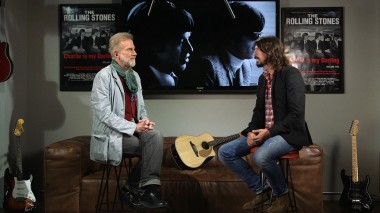
This legendary film, never officially released to the public, is book-ended with new footage including an introduction by Kurt Loder and a post-film discussion with former Nirvana drummer and Foo Fighters founder, Dave Grohl and legendary music producer, Andrew Loog Oldham, the Rolling Stones’ first manager and the film’s producer.
“We are delighted to partner with DIRECTV and Brainstorm Media to offer this rare opportunity to witness rock history as it was being made,” said Jody Klein, Chief Executive Officer of ABKCO. “CHARLIE IS MY DARLING offers unparalleled insight into the band’s music, creative process and personalities. The film brilliantly documents their intersection, circa 1965, with Irish fans whose unbridled enthusiasm resulted in moments of orgasmic combustion.”
“The Stones’ influence on rock ‘n’ roll and their commentary on our world continue to have an impact 50 years later,” said Meyer Shwarzstein, president of Brainstorm Media. “It’s a great fit for Something to Talk About – our theatrical partners are very excited about it. I’m grateful to ABKCO and to DIRECTV for working with us to make this happen.”
A new documentary celebrating the the Rolling Stones’ 50th anniversary offers a rare, intimate look at the group at the start of its career, during a 1965 tour of Ireland.
“Charlie Is My Darling — Ireland 1965” shows a 22-year- old Mick Jagger, now 69, singing the band’s newest hit, “Satisfaction,” before crowds of screaming teens. In it, the members express doubts about their longevity as a band.
“One’s brought up to think that pop music is a very ephemeral thing and it lasts for nothing,” Jagger tells an interviewer. “So and when we first made a record and it got in the charts we thought, well it’s good. We’ll probably be around for a year or maybe a year and a half, and then it’s all going to be over.”
The film will play for one night only on Oct. 24 at Graumann’s Chinese theater in Hollywood, move to a handful of other cities and become part of satellite provider DirecTV (DTV)’s “Something to Talk About” documentary series. A Blu-ray disc goes on sale Nov. 6.
Running 65 minutes, “Charlie” was never intended as a movie. Documentary filmmaker Peter Whitehead was hired to capture the Stones’ weekend in Dublin and Belfast to get the band used to being in front of a camera. Then-manager Andrew Loog Oldham, inspired by the commercial success of the Beatles’ “A Hard Day’s Night,” thought the exercise might prepare the band for a feature film.
“It was never supposed to come out,” Robin Klein, the documentary’s producer, said in an interview. “All of these groups were making movies so Andrew decided to take them to Ireland and just do a test shot.”
Scouring Vaults
The archival footage is making its way to fans as the Stones prepare for a handful of concerts and a broader documentary is released. Yesterday, the band announced four live dates in Britain and the U.S. “Crossfire Hurricane,” a longer film covering the Stones’ five-decade career, makes its debut at the London Film Festival on Oct. 18.
Ahead of the Blu-ray release, “Charlie Is My Darling” will play at theaters in New York, Washington, Dallas, Seattle and Bellingham, Washington, Scottsdale, Arizona, and Santa Monica, California. The show airs on DirecTV on Nov. 10.
Much of the footage has never been seen. Director Mick Gochanour scoured vaults in England for bits of Whitehead’s footage to create a cohesive narrative of the band’s weekend in Belfast and Dublin. The material includes the first performance of “Satisfaction” filmed live, Klein said.
Watts’ Skills
Fans also will see Jagger and Richards writing “Sittin’ on a Fence,” and Charlie Watts ruminating over whether he is really a good drummer. Three of the Stones featured in the film are still playing, including Jagger. Watts is now 71, his place among rock’s great drummers affirmed, and guitarist Keith Richards is 68. Bassist Bill Wyman left the band in 1992. Guitarist Brian Jones drowned in 1969.
The near-simultaneous theatrical, television and home-video release is being used increasingly for smaller productions to capitalize on publicity for the film and generate sales through various outlets.
The film will continue to be shown at festivals in order to generate a wider theatrical release, according to the production company, Abkco Films.
“The way it was shot and restored, the best way to see it is that way,” said Alisa Coleman, senior vice president at Abkco.
A midnight screening of the Rolling Stones documentary “Charlie is My Darling” has been added to the Billboard Hollywood Reporter Film and TV Music Conference on Oct. 24.
The screening will be held at Grauman’s Chinese Theatre located just a block from the W Hotel in Hollywood where the conference is being held Oct. 24 and 25. All conference attendees are eligible to attend.
Created from footage shot during a short tour of Ireland in 1965, “Charlie is My Darling” had its world premiere this week at the New York Film festival. The black and white film, produced by former Stones manager Andrew Loog Oldham in 1965 with Peter Whitehead editing and directing, is filled with band interviews and performances of songs such as “(I Can’t Get No) Satisfaction,” “The Last Time” and “Time is On My Side.”
Producer Robin Klein and director Mick Gochanour have created the new version, which ABKCO will release on DVD on Nov. 6. The film will also be screened at New York’s Museum of Modern Art at part of its retrospective “The Rolling Stones: 50 Years on Film” in November.
In addition to the screening, the revived interest in rock music documentaries will be discussed at a panel on Oct. 25 at the Film and TV Music Conference. Other screenings include David Chase, creator of HBO’s “Sopranos,” making his directorial debut with “Not Fade Away” as well as speakers L.A. Reid, Christina Aguilera; “Breaking Bad”‘s creator, composer and music supervisor; Academy Award winner Gustavo Santaolalla.For more details on the conference and to register click here.
In celebration of the 50th anniversary of The Rolling Stones, The Museum of Modern Art presents The Rolling Stones: 50 Years on Film, November 15–December 2, 2012. This first comprehensive retrospective chronicles the band from the mid-1960s until today through documentaries, fiction features, concert films, music videos, experimental shorts, and archival footage, tracing the film careers of Mick Jagger, Keith Richards, Charlie Watts, and Ronnie Wood, as well as former band members Brian Jones, Mick Taylor, and Bill Wyman, both collectively and individually as composers, performers, producers, and actors. The exhibition is organized by Joshua Siegel, Associate Curator, Department of Film.
Over the past half century, The Rolling Stones have influenced music, cinema, and art, working with some of the most original and iconoclastic directors of their generation. Even with the passing years, their collaborations with Kenneth Anger, Hal Ashby, Robert Frank, Jean-Luc Godard, Martin Scorsese, and Albert and David Maysles and Charlotte Zwerin have lost none of their raw, atavistic energy and thrilling sense of artistic experimentation.
The exhibition opens on November 15 with a rare screening of Robert Frank’s S-8 Stones Footage from Exile on Main St (1972), and Cocksucker Blues (1972), chronicling The Rolling Stone’s 1972 North American cross-country tour; and closes with screenings on December 1 and 2 of Peter Whitehead’s The Rolling Stones Charlie Is My Darling – Ireland 1965 (1965/2012), making its debut after an absence of more than 45 years and offering never-before-seen footage. In addition to such classics as the Maysles and Zwerin’s Gimme Shelter (1970), Donald Cammell and Nicholas Roeg’s Performance (1970), and Taylor Hackford’s Chuck Berry Hail! Hail! Rock ‘n’ Roll (1987), the retrospective also features the band’s landmark concert appearances in Steve Binder’s The T.A.M.I. Show (1964), Leslie Woodhead’s The Stones in the Park (1969), Rollin Blinzer’s Ladies & Gentlemen: The Rolling Stones (1974), Michael Lindsay-Hogg’s The Rolling Stones Rock and Roll Circus (1968/1996), Hal Ashby’s Let’s Spend the Night Together (1983), and Martin Scorsese’s Shine a Light (2008). Also included are the Tom Stoppard scripted wartime spy thriller Enigma (2001), directed by Michael Apted and produced by Mick Jagger; and music videos directed by David Fincher, Michel Gondry, Michael Lindsay-Hogg, Julien Temple, Peter Whitehead, and others.
The Rolling Stones: 50 Years on Film
November 15–December 2, 2012
The Roy and Niuta Titus Theaters
In September 1965, weeks after “(I Can’t Get No) Satisfaction” hit the charts, the Rolling Stones landed in Dublin to play four manic gigs in two days. The band’s manager, Andrew Loog Oldham, commissioned filmmaker Peter Whitehead to capture every moment. “Everybody had done a movie, even Gerry and the Pacemakers,” says Oldham. “I wanted to get the Stones in the mood for dealing with the film business.”
Now that remarkable footage – which rivals the intimate portrait of Bob Dylan in Don’t Look Back – is finally being released as a movie. Charlie Is My Darling: Ireland 1965 (out November 6th) is packed with unseen footage of early Stones mayhem: boozy hotel-room jams, rabid stage-rushing fans and electric live performances of “Time Is on My Side,” “Everybody Needs Somebody to Love” and “Satisfaction.” “They sound like the Pistols in ’77,” says director Mick Gochanour. “It’s raw. You don’t get that sense from Hullabaloo and Shindig!”
Gochanour visited the Stones vault in London, where he found hours of the 1965 footage – including one mesmerizing scene of Mick Jagger and Keith Richards composing the folky Flowers cut “Sittin’ on a Fence.” “I almost had a heart attack when I saw it,” says Gochanour. “The collaboration they used to have, which Keith talks about in his book, is right there.”
Jagger comes off as remarkably astute and forward-thinking for a 22-year-old. “Young people have started a big thing where they’re anti-war, they love everybody and their sexual lives have become freer,” he says in the film. “A whole sort of basis for society . . . but it’s up to them to carry on those ideals instead of falling into the same old routine their parents have fallen into.”
Rolling Stone spoke with Andrew Loog Oldham about the film, his memories of the Stones in the Sixties and his take on new music. “All of our stuff and what followed is on top of the mountain,” he says. “And the newcomers are struggling to get up the hill.”
Why did it feel like the right time to release Charlie Is My Darling?
Without doubt, it is the end of a certain part of the Sixties as we knew it. We managed to put it off for so long, it was still amazing that this dream we dared to pursue still had legs and remained the foundation behind most new music. Age and the Internet were two hits to the body. We do not have a recorded music business in any way similar to that we grew up with; all of our stuff and what followed is on top of the mountain and the newcomers are struggling to get up the hill. So it’s an ideal time for the movie, a representation of what life was like for both the musician and the music fan at the end of the first part of the Sixties. A few years ago, it might not have been as interesting – the end of certain parts of the game were a long way off.
In your book 2Stoned, director Peter Whitehead says that while you had the idea for the film, you gave him complete freedom. What was your vision for the film originally? Why did you commission it?
Vision was not part the game, getting from moment to moment was. Everybody had done a movie – even Gerry & the Pacemakers. I succumbed to that pressure, which was a mistake because it involved following, not leading. Perhaps it was because I was infatuated by film. I just wanted to get the Stones in the mood for dealing with the film business and deciding what we would or would not do. I figured if they’d been filmed for a few days they’d be up for the crap that was to come. It was also a great opportunity to see which of the Stones the camera fancied, and it turned out to be Charlie Watts, hence the title of the movie.
Much has been written about why Charlie Is My Darling was shelved. From your perspective, though, why wasn‘t it released?
We were busy. We had to find a follow-up to “(I Can’t Get No) Satisfaction,” and that was “Get Off of My Cloud,” then we had to have a follow-up to that. The world was very different then. You did not have all these systems that needed product. I think the BBC might have paid 500 quid for it, but they really were not interested. The Stones in the U.K. were still the unwashed and unwanted, in spite of the hits, and in the U.S. you did Ed Sullivan and Dean Martin. Anyway, I didn’t want it out. I think Peter took the film to the Berlin Film Festival and some noted film geezer said that out of all the entries, Charlie is My Darling would be the only one that would hold up in 50 years time. Quite an astute dude. I think Peter was suggested to us by Sean Kenny, the set designer. Sean had seen his Allen Ginsberg film. Peter was perfect.
What was your idea for a later feature film on the Stones [after Charlie Is My Darling]? In your mind, why didn‘t that work out?
Once we could not get A Clockwork Orange, I lost interest. I paid lip service to the idea of Only Lovers Left Alive; great title, average tale. Anyway, the Stones were not really that interested. They knew what fit and what didn’t. We didn’t have to discuss it. Our world was changing at a tremendous rate. Vietnam, civil and racial unrest, Kent State, the second half of the 69’s, drugs as a way of life. Charlie Is My Darling looked like “the Bowery boys go to Belfast” compared to what was going on.
Would you say there‘s a theme to the film? The camera is rolling – do something.
What do you think about the newly-cut version of the film? How does it compare to the original? It’s a good time to see all of the footage, it would not have been then. I would not have wanted anyone to see Mick and Keith composing after a show in a hotel room. Now, well, Mick’s late night rendition of “Tell Me ” is something I wish he’d done in the White House. It’s a great document to a time that would be done with by the end of ’65; ’66 was a completely different animal.
Interesting that you would never have wanted Mick and Keith composing in a hotel room in a film. Why?
Composing in a hotel room onscreen was not part of the process of the time. Only the result was required. Today, of course, is different and the process requires you put as much as you can on the table.
What memories does watching the film bring back?
Well, I saw the tailor who cut Keith and my tweed jackets quite recently. He was still on Berwick Street in Soho. I don’t do memories, I do dreams.
During the brief 1965 tour, what was it like to be at the center of the Stones as “Satisfaction“ was hitting the charts?
Hectic. I’m not being flippant – dreams had come true. The Stones were less “made it in America” as “made by America.” America was wonderful to us. I mean, we recorded on Sunset and Ivar, at RCA, and at Chess Studios on South Michigan in Chicago. Nice going for three years.
What was it like?
Wonderful, once Keith and Mick came up with “Get off of my Cloud,” meaning that there was no time to sit back and bask in the light of “Satisfaction.” We needed another single released in a dozen weeks; that was the way the world worked. I know it works the same way today if you are Katy Perry, but in a reverse process: release first, singles later. I was amazed that when I first heard “Get Off of My Cloud,” there was no absolutely no acknowledgement or nod to “Satisfaction ” whatsoever. The band just drove right over it and said, “Here we are again!”